La Ultima Vez Que Mi Mamá Me Arropó: The Last Time My Mother Tucked Me In
By Quisy
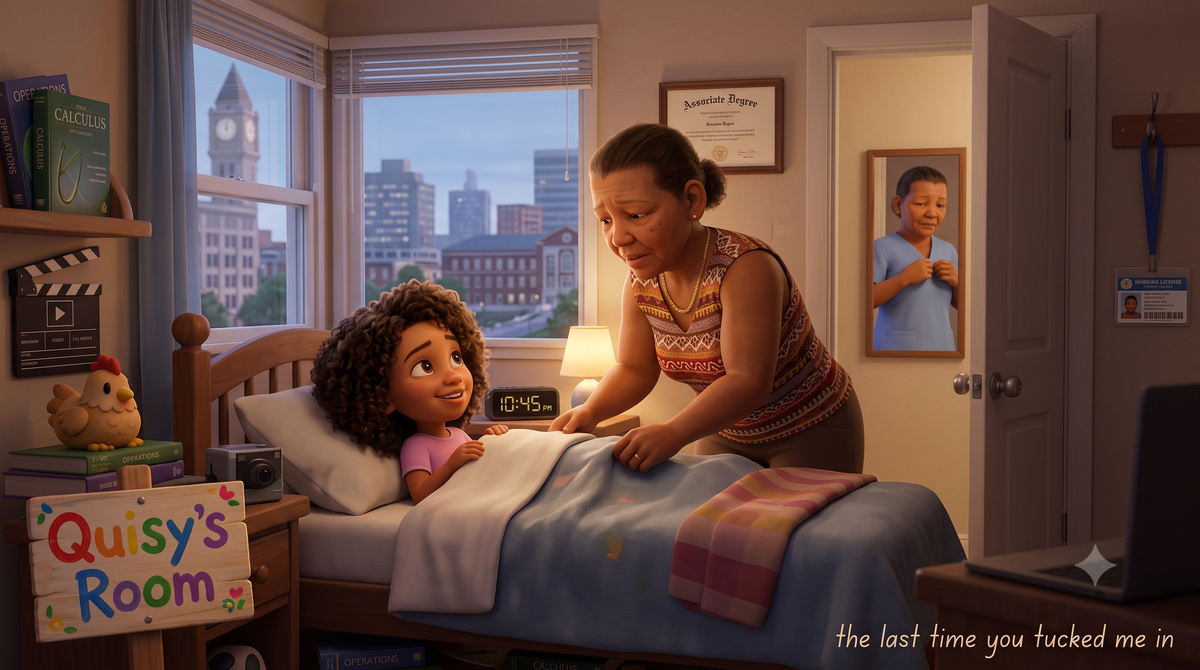
No recuerdo la primera vez que Mami me arropó para dormir. Pero sí recuerdo la última. No porque en ese momento pareciera importante. No porque le tomáramos una foto. Ni porque alguien anunciara que sería la última vez. Pasó como pasan casi todas las cosas que realmente cambian nuestras vidas: en silencio, con total normalidad, sin que nadie supiera que algo estaba llegando a su final. Yo tendría unos nueve o diez años. Ya era lo suficientemente grande para cepillarme los dientes sola, para protestar cuando llegaba la hora de dormir y para insistir en que ya no era una niña pequeña. Mami entró a mi cuarto como hacía todas las noches. Me acomodó la sábana hasta los hombros. Me dio un beso en la frente. Apagó la luz. Y salió de la habitación. Nada extraordinario. Nada dramático. Era una noche cualquiera. Solo que no lo era. Porque, en algún momento entre esa noche y los años que siguieron, la vida pasó.
Esa vida que tantas familias inmigrantes conocemos demasiado bien. Llegó el trabajo. Llegaron las cuentas. Llegaron las horas extras. Llegaron las responsabilidades. Llegó la supervivencia. Y, poco a poco, la rutina de dormir arropada por Mami desapareció. No fue de un día para otro. Nadie se sentó a tomar esa decisión. Nadie dijo adiós. Simplemente hubo menos noches en casa, más turnos hasta tarde, más madrugadas empezando antes de que saliera el sol y más noches en las que yo ya estaba dormida cuando ella regresaba. Hasta que, sin darme cuenta, empecé a acostarme sola. Cuando era niña no lo entendía. A veces me enojaba. A veces sentía que se había olvidado de mí. Miraba a otras familias y me preguntaba por qué sus padres parecían tener más tiempo, por qué iban a todos los juegos, por qué asistían a todas las actividades de la escuela y por qué parecían estar presentes de una forma en la que mi mamá muchas veces no podía. Los niños no entienden el sacrificio. Los niños entienden la ausencia. Y durante mucho tiempo eso fue lo único que yo veía: la silla vacía, los momentos perdidos, las largas horas de trabajo y el cansancio. Lo que no podía ver era todo el peso que ella cargaba sobre sus hombros. No veía el alquiler. No veía la compra del supermercado. No veía el miedo. No veía la presión de construir una vida en un país que todavía no era el suyo. No veía la enorme responsabilidad de asegurarse de que sus hijos tuvieran oportunidades que ella nunca tuvo. No sabía que salía de casa antes de amanecer. No sabía que renunciaba a tantas cosas para que a nosotros no nos faltara nada. No sabía que estaba cansada de una manera que los niños todavía no pueden comprender.
Todo lo que yo sabía era que los cuentos antes de dormir habían desaparecido. Hoy soy mayor. Lo suficientemente mayor para entender cuánto cuesta la vida. Lo suficientemente mayor para saber cómo se siente el agotamiento. Lo suficientemente mayor para reconocer el sacrificio cuando lo veo. Y, a veces, pienso en esa niña acostada en su cama preguntándose dónde estaba su mamá. Cómo quisiera sentarme a su lado, abrazarla y decirle: "Tu mamá nunca dejó de quererte. Te estuvo amando todo el tiempo." Te amó en cada turno de trabajo. En cada hora extra. En cada sacrificio. En cada noche sin dormir. Lo único que cambió fue la manera de demostrarlo. El amor dejó de parecerse a un cuento antes de dormir y empezó a parecerse a un cheque de pago. Dejó de verse como una cobija acomodada hasta los hombros y empezó a verse como un techo sobre tu cabeza. Dejó de sonar como un "te quiero" y empezó a sonar como: "¿Comiste?" "Llámame cuando llegues." "Ponte un suéter." "¿Necesitas algo?" Porque así aman las madres dominicanas. No siempre con grandes discursos. No siempre con abrazos interminables. Muchas veces aman trabajando. Aman sacrificándose. Aman resolviendo. Aman preocupándose. Aman poniendo a sus hijos primero, incluso cuando nadie se da cuenta. Y quizás, cuando somos pequeños, confundimos esa ausencia con falta de amor. Pero cuando la vida nos toca vivirla desde el otro lado, entendemos que nunca fue ausencia. Siempre fue amor. Solo que llevaba uniforme de trabajo.

I don't remember the first time my mother tucked me into bed. But I remember the last. Not because it was important at the time. Not because we took a picture. Not because anyone announced it. It happened the way most important things happen. Quietly. Ordinarily. Without realizing it was the end of something.
I must have been nine or ten. Old enough to brush my own teeth. Old enough to argue about bedtime. Old enough to insist I wasn't a baby anymore. My mother came into my room the way she always did. She pulled the blanket up to my shoulders. Pressed a kiss against my forehead. Turned off the light. And walked out. Nothing remarkable. Nothing dramatic. Just another night. Except it wasn't. Because somewhere between that night and the next few years, life happened. The kind of life immigrant families know too well. Work happened. Bills happened. Overtime happened. Responsibility happened. Survival happened. And little by little, bedtime disappeared. Not all at once. There was no meeting. No decision. No goodbye. Just fewer evenings at home. More late shifts. More mornings that started before sunrise. More nights where I fell asleep before she got home. And before I knew it, I was putting myself to bed. As a kid, I didn't understand. Sometimes I was angry. Sometimes I felt forgotten. I would watch other families and wonder why their parents seemed to have more time. Why they came to every game. Why they sat at every school event. Why they seemed present in ways my mother couldn't always be.
Children don't understand sacrifice. Children understand absence. And for a long time, that's all I saw. The absence. The empty seat. The missed moments. The long hours. The exhaustion. What I couldn't see then was what she was carrying. I couldn't see the rent. The grocery bill. The fear. The pressure of building a life in a country that wasn't hers. The responsibility of making sure her children had opportunities she never did. I didn't know she was leaving for work before dawn. I didn't know she skipped things for herself so we could have things we needed. I didn't know she was tired in a way children aren't supposed to understand. All I knew was that bedtime stories stopped.
Now I'm older. Old enough to know what life costs. Old enough to understand what exhaustion feels like. Old enough to recognize sacrifice when I see it. And sometimes I think about that little girl lying in bed wondering where her mother was. I wish I could sit beside her. I wish I could tell her: Your mother didn't stop loving you. She was loving you the whole time. Every shift. Every overtime hour. Every sacrifice. Every sleepless night. Love just changed uniforms. It stopped looking like bedtime stories and started looking like paychecks. It stopped looking like tucking you in and started looking like keeping a roof over your head. It stopped sounding like "I love you." And started sounding like: "¿Comiste?" "Llámame cuando llegues.""Ponte un suéter." "¿Necesitas algo?"
That's the thing about immigrant parents. Many of them don't express love the way movies teach us love should look. They express it through responsibility. Through sacrifice. Through showing up however they can. Even when they're exhausted. Even when nobody notices. Even when it costs them pieces of themselves. So no, I don't remember the first time my mother tucked me into bed. But I remember the last. And now, years later, I understand something I couldn't understand then. That wasn't the moment she stopped taking care of me. It was the moment she started carrying me in a different way. And somehow, I think that's an even greater kind of love.
💛 Una pregunta para ti
¿Qué hizo tu mamá, tu papá o tus padres cuando eras niño que en ese momento no entendías, pero que hoy, como adulto, valoras profundamente?
¿Hubo un momento en el que te diste cuenta de que todos esos sacrificios eran, en realidad, su manera de decirte "te amo"?
Con todo mi cariño,
Quisy 🌅
Quisqueya Rising
Salud • Riqueza • Amor • Legado 🇩🇴✨

A Question For You
What is something your parents did that you didn't understand as a child but appreciate now as an adult?
Was there a moment when you realized their sacrifices were actually acts of love?
Con cariño,
Quisy 🌅
Quisqueya Rising
Health • Wealth • Love • Legacy